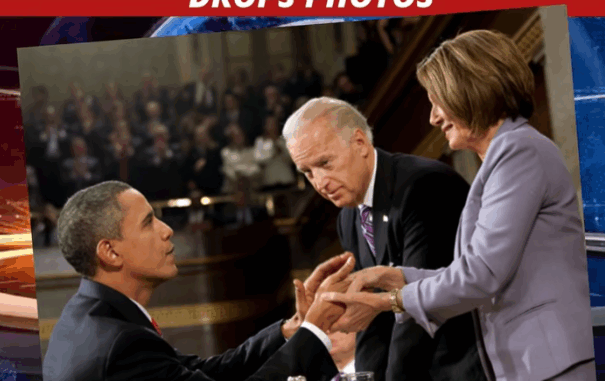
Trump Trolls Obama, Biden With Harsh Labels On Presidential Photos
The Trump White House has installed new plaques beneath the portraits in the “Presidential Walk of Fame,” a gallery highlighting former U.S. presidents. The plaques criticize previous presidents, echoing President Donald Trump’s rhetoric toward his Democratic predecessors.

One describes former President Joe Biden as the “worst president in American history,” while another labels former President Barack Obama “one of the most divisive political figures in American history.”
Trump has also replaced Biden’s portrait with an image of an autopen. He has repeatedly criticized the use of autopens — a tool used by multiple administrations — claiming Biden’s signature was applied to documents without his authorization. Trump has vowed to repeal actions from the Biden administration that were signed using an autopen, NewsNation noted in a report this week.
The first new plaque under Biden’s portrait refers to the former president as “Sleepy Joe Biden” and calls him “the worst President in American History,” adding that he won the office “as a result of the most corrupt Election ever seen in the United States.”
The plaque also criticizes the Biden administration’s handling of the economy, inflation, energy and immigration, and references the U.S. withdrawal from Afghanistan, the war in Ukraine and the Oct. 7 Hamas attack on Israel.
A second plaque asserts that Biden was “dominated by his Radical Left handlers” and accuses his staff and the media of concealing concerns about his mental fitness and his use of an autopen. It also accuses Biden of targeting his political enemies and makes reference to the “Biden Crime Family.”
The new plaque beneath Obama’s portrait criticizes the Affordable Care Act and highlights the subsequent election of Republican majorities in the House and Senate. It also faults the Obama administration’s approach to the economy, the Iran nuclear deal and the Paris climate agreement.
The plaque references the rise of ISIS in the Middle East and Russia’s invasion of Crimea, and says Obama “crippled” small businesses through regulation.
It further accuses Obama of spying on Trump’s 2016 campaign and of orchestrating what it calls the “Russia hoax.” The plaque also says Obama selected former Secretary of State Hillary Clinton as his successor and notes her loss in the general election, NewsNation noted.
Meanwhile, the U.S. Department of Justice has filed lawsuits against four jurisdictions — the District of Columbia, Georgia, Illinois, and Wisconsin — for “failure to produce their full voter registration lists upon request.”

“The law is clear: states need to give us this information, so we can do our duty to protect American citizens from vote dilution,” said Assistant Attorney General Harmeet K. Dhillon, who leads the Justice Department’s Civil Rights Division. “Today’s filings show that regardless of which party is in charge of a particular state, the Department of Justice will firmly stand on the side of election integrity and transparency.”
The lawsuits come on the heels of damning revelations about Georgia’s largest county. Election integrity researcher David Cross uncovered what he described as “systemic noncompliance” after paying nearly $16,000 for Fulton County’s 2020 election records. Cross told the Georgia State Election Board that 134 tabulator tapes—representing roughly 315,000 early votes—were missing required poll worker signatures.
“Because no tape was ever legally certified, Fulton County had no lawful authority to certify its advanced voting results to the Secretary of State. Yet it did,” Cross said. “And Secretary Raffensperger accepted and folded those uncertified numbers into Georgia’s official total.”
The irregularities did not end there. Cross’s review also revealed duplicate scanner serial numbers, mismatched memory cards, and precincts reporting operation hours as late as 2:09 a.m.
These findings corroborated a 2024 reprimand by Georgia’s State Election Board, which determined Fulton County had double-counted at least 3,075 ballots in the 2020 recount and could not verify how many duplicates were ultimately included in the final certified total.
Investigators admitted that they were missing chain-of-custody records for numerous ballot images and that “some underlying records were lost entirely.”
THE 47-SECOND SILENCE: HOW JILL BIDEN’S SURPRISE DIG AT SENATOR JOHN KENNEDY BACKFIRED AND TURNED A NATIONAL EDUCATION SUMMIT INTO A POLITICAL EARTHQUAKE
The National Education Leadership Summit was supposed to be routine — polished speeches, polite applause, bipartisan talking points, and an agenda safely tucked into the boundaries of political etiquette. That was the script. That was the expectation. That was what the organizers,
 donors, and broadcasters believed they were paying for.
What they got instead was a moment so explosive, so unexpectedly raw, that the entire auditorium — and eventually the entire country — froze for
exactly 47 seconds.
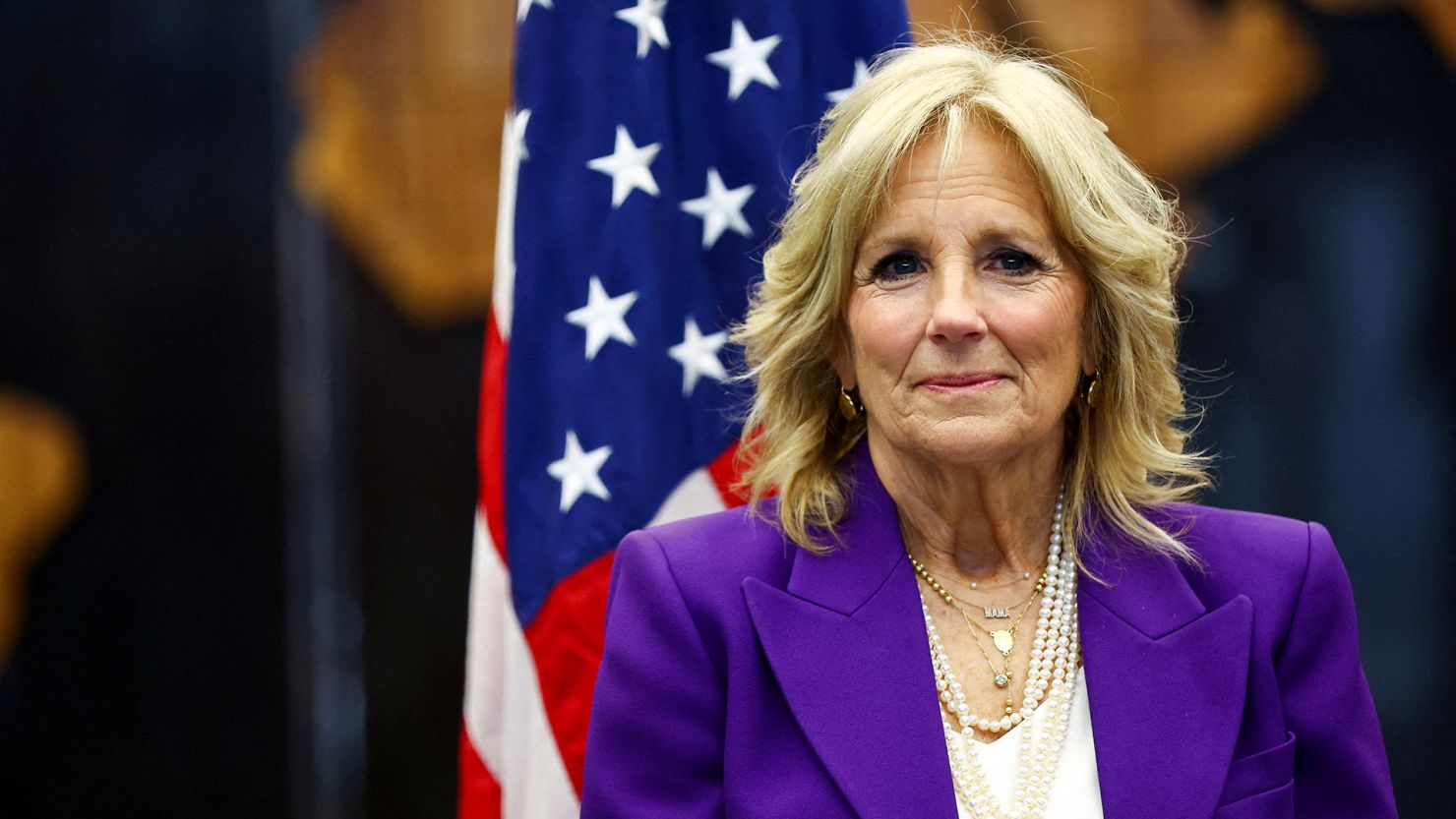
The moment began with Jill Biden, the First Lady, standing at the podium delivering a keynote address on federal standards and post-pandemic academic recovery. Her tone was warm, familiar, practiced — the cadence of a seasoned educator who knew how to hold a room.
But then, without warning, she deviated from her teleprompter.
What came next would spark the most talked-about political exchange of the year.
I. THE JAB THAT CAUGHT EVERYONE OFF GUARD
The First Lady glanced down at her notes, then up toward the semicircle of seated lawmakers. Her eyes settled briefly on Senator John Neely Kennedy of Louisiana — known for his sharp wit, sharper tongue, and willingness to turn even a routine hearing into a viral moment.
And then she said it.
“Some of us up here understand the importance of education.And some of us… well, let’s just say they’re more familiar with punchlines than policy.”
The crowd reacted with a confused, awkward ripple — half-laugh, half-gasp.
Kennedy, seated in the second row, slowly lowered his pen.A single eyebrow lifted.
Reporters exchanged glances.
One senior editor whispered:
“Did she just go after Kennedy at an education summit?”
Jill Biden pressed on, adding:
“If our children studied as lightly as certain senators did, we’d all be in trouble.”
That’s when the atmosphere shifted.
A strange, heavy quiet fell — the kind of silence that signals someone had crossed a line.
Because while Kennedy was famous for roasting cabinet secretaries, he rarely took incoming fire. And almost never from a First Lady. The tension was electric, palpable, tightening the room like a coiled spring.
No one expected what came next.
II. THE PAUSE BEFORE THE STORM
The moderator tried to move on, flipping hurriedly through cue cards. But the damage was done. Every camera operator in the room quietly pivoted toward Kennedy, sensing something was coming.
And something was.
Kennedy didn’t immediately rise.He didn’t look offended.He didn’t even adjust his posture.
He simply sat still.
Counting.Measuring.Letting the room simmer in its own discomfort.
Witnesses later said the silence itself was weaponized — a slow, deliberate wait that felt longer than a commercial break. But the clock would show it lasted only 47 seconds
.
Forty-seven seconds that would become political legend.
At second 48, Kennedy stood.
And the entire summit shifted from policy forum to primetime confrontation.
III. JOHN KENNEDY RETURNS FIRE
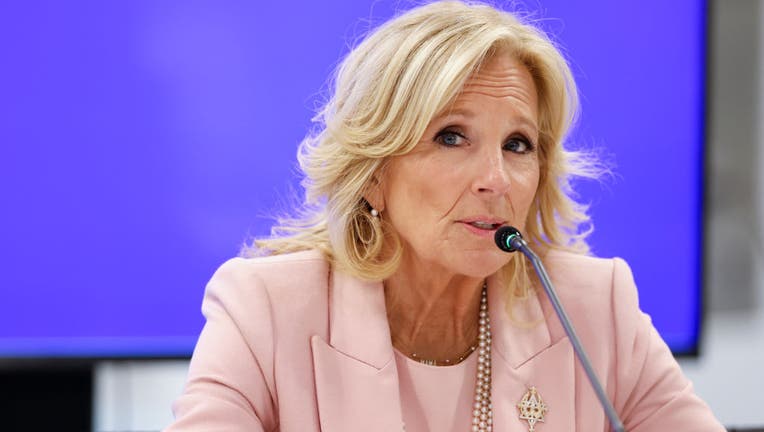

He walked toward the auxiliary microphone — not rushed, not angry, but with the unhurried certainty of a man who had built a career on turning insults into opportunities.
Adjusting his glasses, he looked directly at Jill Biden.
And then he said the line that detonated the auditorium:
“Dr. Biden, with all due respect, I may tell jokes…but at least I don’t treat education like one.”
Gasps echoed through the ballroom.
Kennedy wasn’t done.
“You questioned my schooling. Fine.Let’s talk about yours.While I was working two jobs to pay my way through UVA and Oxford, you were teaching kids how to circle verbs — noble work, sure…
but don’t confuse your résumé with a doctorate in policy.”
A murmur rose from the crowd — some shocked, some delighted, all riveted.
“If you’re going to mock a senator’s education,
you ought to show you did your homework first.”
The moderator tried to intervene.
“Senator, we need to—”
Kennedy raised one finger.
The room fell silent again.
“And another thing,”
he continued, “I’ve never made fun of how you speak, how you teach, or how you carry the title ‘Doctor.’ That’s your work. I respect that.But you came here today to talk about children — and instead you made it personal.”**
Cameras zoomed in.Journalists typed furiously.Producers mouthed silently into headsets.
Kennedy then delivered the kill line — the one clip that would hit 92 million views by midnight:
“Education isn’t improved by insulting people who disagree with you.
You don’t lift kids up by talking down to adults.”
The auditorium froze.
Even Jill Biden looked stunned.
IV. THE ROOM REACTS — AND THE SUMMIT DERAILED
What followed wasn’t applause.
Wasn’t outrage.Wasn’t cheering.
It was silence — thick, heavy, total.
Dozens of educators looked back and forth between the two figures onstage as if watching two tectonic plates collide. A few scribbled notes. Others simply stared.
A White House aide buried her face in her hands.
A Louisiana superintendent whispered to a colleague:
“Lord… he flipped the whole summit upside down.”
After nearly twenty seconds of suspended shock, the audience finally released a low wave of murmurs and scattered applause — hesitant at first, then building as Kennedy returned to his seat.
The moderator, glasses trembling, attempted to salvage the agenda:
“Uh… thank you, Senator Kennedy. And now, on to—”
But nothing went “on.”
The tone was shattered.
The summit was now a spectacle.
V. SOCIAL MEDIA ERUPTS
Within three minutes, clips of the exchange hit X, TikTok, and Facebook.
Within ten minutes, #47Seconds was trending in six countries.
Within one hour
, three versions of Kennedy’s speech had surpassed five million views each.
Political commentators weighed in instantly:
• “Kennedy just ran a masterclass in controlled retaliation.”• “Jill Biden walked into that one.”
• “This will haunt education messaging for weeks.”
Meanwhile, conservative pages erupted in celebration, posting slowed-down versions of the moment Kennedy adjusted his glasses before striking.
Liberal activists accused him of “disrespect,” but even many admitted privately:
“He outplayed the room. It was surgical.”
Late-night hosts scrambled to rewrite monologues.Cable networks cut programming to air the clip.Online editors replaced their lead stories.
One anchor summed it up:
“What was supposed to be a summit became a showdown.”
VI. BEHIND THE SCENES — THE AFTERMATH
Sources inside the summit revealed that White House staffers were blindsided. Jill Biden reportedly left through a side exit, declining questions.
Kennedy, on the other hand, lingered.He shook hands.Spoke with educators.Even smiled.
One attendee said:
“He looked like a man who’d just done exactly what he came to do — even if he didn’t plan it.”
A Louisiana teacher added:
“That wasn’t politics. That was someone standing up after being underestimated.”
VII. WHY THOSE 47 SECONDS MATTERED
This wasn’t about education.Or degrees.Or credentials.
It was about:
• how quickly a narrative can flip• how tone can overshadow policy• how a single deviation from a teleprompter can trigger a political avalanche• how John Kennedy’s unpredictability remains unmatched in Washington
And most importantly:
It showed that in modern American politics, silence is not passive —it is preparation.
Kennedy used 47 seconds the way a swordsman uses distance:to measure the opponentto let their attack overextendand then to strike exactly where it hurts most.
And strike he did.
VIII. THE LINE THAT WILL BE REMEMBERED
Hours later, as headlines continued to multiply, analysts agreed on one thing:
The moment Jill Biden mocked his education, Kennedy became the story.
Not because he shouted.Not because he escalated.But because he delivered a line that will circulate for years:
“You don’t lift kids up by talking down to adults.”
Clean.Sharp.Impossible to counter.
IX. THE FINAL IMAGE — A SUMMIT TRANSFORMED INTO CINEMA
As the lights dimmed and attendees exited into the late afternoon sunlight, conversations buzzed with the same sentence:
“Did you see what Kennedy just did?”
The summit never returned to normal.Panels stumbled.Speakers hesitated.Organizers looked shell-shocked.
But John Kennedy?He left exactly as he arrived — slow, steady, unbothered.
The First Lady’s jab was supposed to be a rhetorical flourish.
Instead, it became the spark for a showdown.
Forty-seven seconds of silence.
One devastating line.
And a political moment that will live far longer than the summit itself