The Quiet Tension
In bustling cities across the United States, businesses owned by Muslim entrepreneurs are an integral part of the community fabric. Yet, for many of these business owners, the feeling of security and belonging is rapidly eroding. The atmosphere of fear, hostility, and increasing social pressure has left many feeling alienated in the very country they call home. One such owner, Ahmad, a middle-aged restaurateur in Chicago, has built his business from the ground up, but these days, he spends more time looking over his shoulder than managing his restaurant.
Ahmad remembers the days when customers came into his restaurant with smiles, enjoying his mother’s famous falafel and hummus. But recently, things have changed. The political rhetoric surrounding Muslim communities has grown increasingly tense, with conversations about immigration, national security, and terrorism overshadowing the warmth of the daily routine. People who once saw Ahmad as just another restaurant owner now look at him with suspicion, as if his mere presence is a reminder of everything they fear.
The quiet tension in his community is palpable. His once loyal customers now pass by without even a glance. Ahmad wonders how much longer he can keep his doors open. The fear has begun to seep into his daily life, making him question whether staying in the U.S. is still worth the price of his safety and peace of mind.
The Weight of Political Decisions
For many Muslim business owners, the political climate is more than just a backdrop to their work; it has become an active threat. Recent political decisions—such as travel bans, heightened surveillance of Muslim communities, and public debates that have equated Muslims with terrorism—have created a climate of fear and alienation. Zainab, who owns a small bookstore in Los Angeles, can hardly remember the last time she felt truly safe. The rhetoric in the media often places Muslims under a microscope, making them feel as though their every move is being watched.
The constant barrage of political narratives that paint Muslims as outsiders has created a dangerous environment where suspicion runs high. Zainab recalls a time when customers would come in to chat about books and life. Now, she can feel their eyes on her, their conversations halting as soon as she enters the room. There’s a constant unease that she can’t shake. Every news story that feeds into the narrative of “us versus them” chips away at her sense of belonging.
Zainab never imagined that she would feel compelled to leave her own country. Yet, as she navigates this increasingly hostile environment, the thought of closing her bookstore and moving to a place where she is not constantly under siege crosses her mind more often than she cares to admit.
Fear on the Streets
Walking down the street, many Muslim business owners have reported an increase in harassment. Public spaces, once a place of safety, have become battlegrounds of discrimination. Sami, a young entrepreneur who runs a successful tech startup in New York, remembers the time he was walking home from work when a passerby shouted, “Go back to where you came from!” It wasn’t the first time he had encountered such a comment, but it was the first time it felt like more than just an isolated incident.
The rise in hate crimes, especially against Muslims, has made the streets feel unsafe. Sami has had to change his route home multiple times, avoiding certain neighborhoods and even altering his schedule. What used to be a routine walk has now become a daily source of anxiety. It’s not just the fear of physical harm but the emotional toll of feeling unwelcome in his own skin.
Sami’s story is echoed by countless other business owners, who find themselves constantly on edge, wondering when the next incident will happen. The streets, once filled with opportunity and promise, have become places of hostility. And with each passing day, the thought of uprooting and leaving the country seems like a safer option than facing the unknown dangers ahead.
The Personal Toll of Hostility
The emotional toll on Muslim business owners cannot be overstated. These individuals are not just fighting for the survival of their businesses but for their dignity and humanity. Mariam, who owns a boutique in Seattle, recounts the emotional toll of a recent incident where a customer openly mocked her hijab and questioned whether she should be working in the U.S. “I felt humiliated, degraded,” Mariam says. “But the worst part was the sense that this wasn’t the first time, and it wouldn’t be the last.”
Mariam has spent years building her boutique, turning it into a vibrant space for women’s fashion. But now, she finds herself constantly battling self-doubt. The public ridicule and verbal abuse have begun to affect her mental health. She often feels torn between defending her right to be there and simply retreating into silence to avoid confrontation.
Mariam’s experience is a painful reminder of how hostility towards Muslim business owners is not just a political issue but a deeply personal one. The fear and stress that come with constant harassment have left many questioning their place in society, and some are even considering leaving everything behind.
Impact on Family Life
For Muslim business owners, the pressure extends beyond their businesses and into their homes. Many of them are also parents, and the fear for their children’s safety weighs heavily on them. Tariq, who owns a clothing store in Detroit, worries about the future his children will face in a country that increasingly views their heritage with suspicion.
“I want my kids to grow up in a place where they can be proud of their identity, where they can walk down the street without fear,” Tariq says. “But that dream feels increasingly out of reach. They come home from school telling me stories of classmates making fun of their names, their accents, and their religion.”
Tariq’s concern is not unfounded. Many Muslim parents are finding it harder to protect their children from the hostility and prejudice they face. The rise of anti-Muslim sentiment has made it harder for Muslim children to thrive in school, and many parents fear for their children’s future in this climate.
Financial Strain and Business Struggles

The emotional and physical toll of living in a climate of hostility also has financial consequences. For many Muslim business owners, the increase in discrimination and fear has led to a decline in customer base. Nadia, who owns a small cafe in Houston, has seen a steady decrease in foot traffic over the past year. The once thriving neighborhood has become quieter, with fewer customers willing to venture out of their homes.
“I’ve had customers who used to come every day suddenly stop coming,” Nadia explains. “It’s as though the fear in the air has kept them away, and I’m left wondering if they’re afraid of me, of what I represent.”
The decline in sales has put a strain on Nadia’s business. She struggles to pay rent and cover other operating costs while dealing with the emotional stress of feeling disconnected from her community. As business owners face declining revenues, many are left wondering how long they can continue before they are forced to make a difficult decision: to stay and fight or to close their doors and leave.
The Role of Media in Shaping Perception
The media plays a significant role in shaping public perception, and for Muslim business owners, the media’s portrayal of their community can be damaging. The constant portrayal of Muslims in the media as threats or outsiders has contributed to the negative stereotypes and discrimination they face.
“I’ve seen how the media twists stories, using fear-mongering headlines to paint a picture of Muslims as a problem,” says Amir, who owns a bakery in Florida. “It creates a narrative that people believe, even when it’s not true. And that narrative spills over into how I’m treated.”
The media’s portrayal of Muslims as a monolithic group, defined solely by their religion and ethnicity, has perpetuated a cycle of fear and hostility. For Muslim business owners, this means that their identities are often reduced to mere stereotypes, making it even harder to be accepted in society.
A Sense of Betrayal
For many Muslim business owners, the feeling of betrayal runs deep. They came to the United States with dreams of success and opportunity, but now they are confronted with a system that seems to be actively working against them. Their businesses, which once represented a part of the American dream, have become symbols of division and suspicion.
Ahmed, a second-generation business owner in San Francisco, expresses his sense of betrayal: “I’ve worked hard my whole life to build my business, to be part of this country’s economy. But now, I feel like the country doesn’t want me here. The very place that promised me opportunity has turned its back on me.”
The feeling of betrayal is compounded by the knowledge that the country they have invested so much in no longer feels like home. The idea of leaving, of walking away from everything they’ve built, is painful, but for many, it is starting to feel like the only option left.
The Desire for Solidarity
Despite the overwhelming sense of fear and alienation, Muslim business owners are not alone. Across the country, communities have come together in solidarity, standing with Muslim business owners to show their support. From local protests to online campaigns, there has been a push to raise awareness about the discrimination and challenges faced by these entrepreneurs.
“I’ve seen so many people, both Muslim and non-Muslim, stand by my side,” says Zainab. “It’s heartening to know that not everyone sees me as an outsider. There are still good people in this country who believe in what’s right.”
These acts of solidarity provide a glimmer of hope for Muslim business owners, reminding them that they are not fighting this battle alone. While the road ahead may be difficult, the support of others helps them hold on to the belief that things can get better.
Exploring Other Options

As the environment becomes increasingly hostile, many Muslim business owners are beginning to explore other options. Some are considering relocating to other countries where they might feel safer and more accepted. Countries with more inclusive policies or better protections for religious minorities are becoming attractive alternatives.
Sami, who has built a successful tech business in New York, has begun researching opportunities in Canada and Europe. “I love this country, but I don’t feel safe here anymore. It’s heartbreaking to think of leaving everything I’ve worked for, but my family’s safety comes first.”
While leaving the U.S. is not an easy decision, many Muslim business owners are coming to the conclusion that it may be the only way to ensure their well-being and that of their families.
The Impact on Community Identity
The sense of displacement is not only felt by individual business owners but also by the communities they are a part of. Muslim-owned businesses are a crucial part of the fabric of many American neighborhoods. When these businesses close, the entire community suffers.
“The community I built around my business isn’t just about profits,” says Mariam. “It’s about belonging. It’s about knowing your neighbors and supporting each other. If I leave, that’s a piece of our shared identity lost.”
The closure of Muslim-owned businesses could have long-lasting impacts on local economies and the vibrancy of diverse communities. The sense of loss extends far beyond the individuals involved, affecting everyone who relied on these businesses for services, employment, and connection.
Holding onto Hope
Despite the fear and challenges they face, many Muslim business owners still hold on to the hope that things can change. They are fighting not just for their businesses, but for their right to live freely in the country they love.
“We’ve been through difficult times before,” says Ahmad. “But we’ve always found a way to persevere. I’m not giving up yet.”
For Muslim business owners, the battle is far from over. The road ahead is uncertain, but their determination to survive and thrive remains strong. Whether they stay or leave, their stories are a testament to resilience, hope, and the enduring strength of the human spirit.
Jasmine Crockett Trips Over Her Own Talking Points on Big Government 
Representative Jasmine Crockett’s latest complaint about Republicans has landed with a thud, and for good reason. In a recent rant, she declared, “It is so rich that the Republicans believe in small government, and this is the biggest government that I’ve ever seen.”The line was meant to sting. Instead, it exposed a stunning contradiction and left Democrats once again looking like they are spinning in circles, recycling talking points that collapse under the weight of their own logic.
For decades, Democrats have been the champions of expanding government. They push for bigger budgets, more programs, and new agencies. From healthcare mandates to sprawling climate packages, their answer to every problem is the same: let Washington do more and spend more.Now, in an almost comic twist, Crockett is pretending to be shocked by the size of government. The irony is impossible to miss. Her party engineered much of the bloat she now criticizes.From Biden’s trillion-dollar spending packages to the alphabet soup of new agencies tasked with regulating every aspect of life, Democrats have grown the federal footprint to historic levels.For Crockett to suddenly feign outrage is like an arsonist complaining about the size of the fire they just set.
While Crockett whines, President Donald Trump and the Department of Government Efficiency (DOGE) are actually doing something about it. Their plan is straightforward: cut waste, fraud, and abuse across federal programs. That inevitably means shrinking government size—fewer unnecessary agencies, fewer overlapping offices, and fewer taxpayer dollars burned on nonsense.
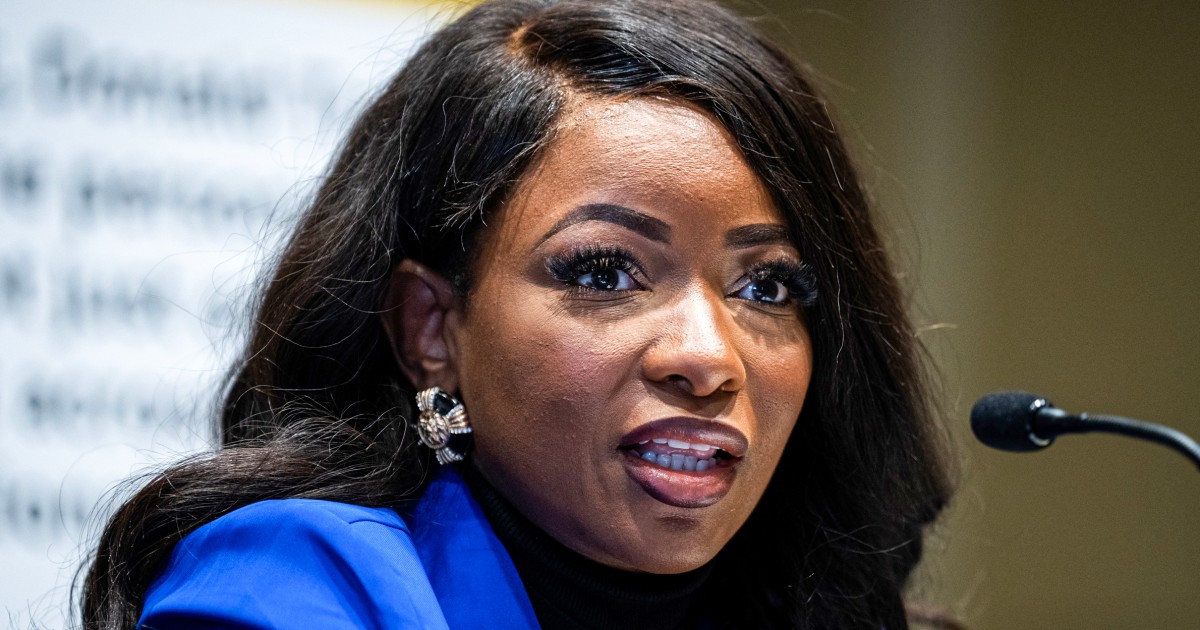
To ordinary Americans, this is common sense. To Crockett and her Democratic colleagues, it’s heresy. They depend on bloated programs and federal handouts to keep their voter coalitions satisfied.Yet when Republicans act to streamline government, Democrats flip-flop between claiming it’s authoritarian to dismantle bureaucracy and complaining that Republicans preside over “the biggest government ever.”This is where Crockett’s comment truly shines—in showing how badly Democrats are flailing. They constantly contradict themselves, performing what critics call “loop backs.” When one argument fails, they circle back to its opposite without embarrassment.They screamed for years that Trump was dangerous because he wanted to strip power from federal agencies. Now they accuse him of overseeing an oversized government.They opposed his tax cuts as reckless, only to later admit the economy grew. They attacked his border enforcement as cruel, only to now acknowledge illegal immigration is out of control under their own watch.
Crockett’s line is just the latest in this pattern of loop backs. She inadvertently admitted the truth—that government is too big—but failed to realize she was also condemning her own party.Crockett wants voters to believe Republicans are hypocrites for talking about small government. But in fact, Republicans are the only ones taking meaningful action to rein it in. By mocking the very effort to cut waste, she only highlights the Democratic Party’s addiction to bureaucracy.
Her rant also reveals something deeper: Democrats are running out of coherent attacks. With Trump delivering tangible wins—lower taxes, stronger borders, and now a campaign to slash government waste—Democrats are left shouting contradictions that even their own base struggles to take seriously.
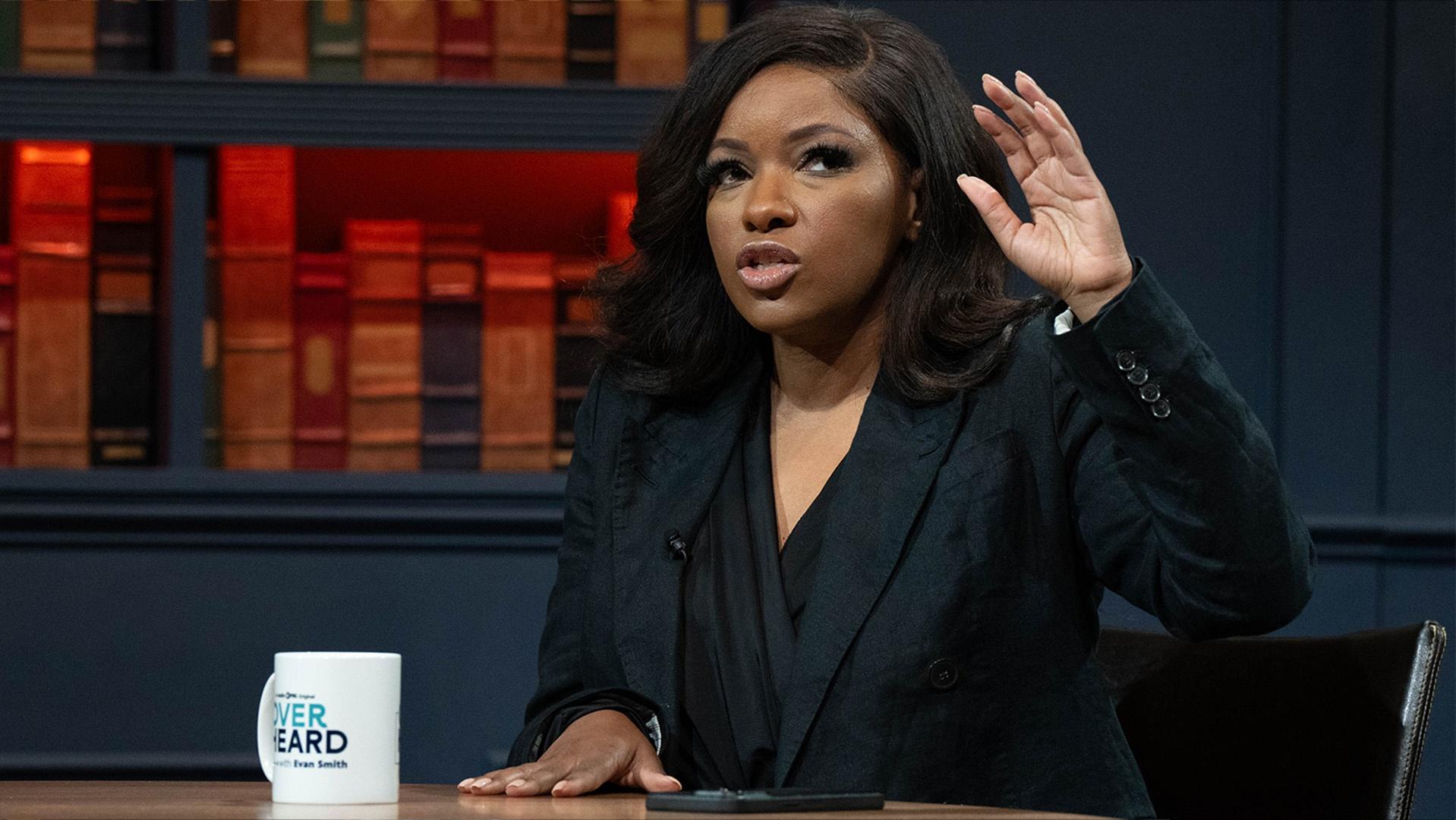
The American people can spot hypocrisy when they see it. They know Democrats have long been the party of big government, and they know Trump is working to reverse that trend.Crockett’s attempt to flip the script only invites ridicule. She mocked Republicans for shrinking government while admitting it’s too large. She tried to score points but instead landed in a pile of her own contradictions.This is why voters increasingly view Democratic messaging as hollow. Every complaint sounds more like projection than principle. Crockett’s “biggest government I’ve ever seen” line may have been intended as an insult, but it reads as a confession.
Meanwhile, Trump and his allies are delivering results. Democrats can’t admit their failures, so they resort to confusion tactics, hoping nobody notices their contradictions.But people notice. Independent voters are especially sensitive to government waste, and Crockett’s comment only underscores how out of touch Democrats are. The more they try to spin, the more obvious their flailing becomes.Rep. Jasmine Crockett’s complaint about “the biggest government I’ve ever seen” was supposed to sting Republicans. Instead, it made her the punchline.She belongs to the party that grew government beyond recognition, yet now wants to pretend she’s shocked by its size. While Trump and DOGE are cutting waste and shrinking bureaucracy, Crockett and her colleagues are looping back into contradictions, exposing their intellectual bankruptcy.
She belongs to the party that grew government beyond recognition, yet now wants to pretend she’s shocked by its size. While Trump and DOGE are cutting waste and shrinking bureaucracy, Crockett and her colleagues are looping back into contradictions, exposing their intellectual bankruptcy.

Democrats wanted to land a punch. Instead, Crockett swung in a circle and hit her own party in the face.