Epstein Lawyer Says Judges Suppressing Epstein Info, Not Trump Admin

Alan Dershowitz, Jeffrey Epstein’s former lawyer, claims two courts in New York are withholding information on the notorious financier and convicted sex offender’s case, not the Trump administration.
His comments come as President Donald Trump and his Justice Department (DOJ) have faced criticism for how they handled the case’s materials. Dershowitz, who helped obtain Epstein a plea agreement in 2008, stated that there is no Epstein “client list,” only a redacted FBI affidavit from accusations.
During an interview on NewsNation with Chris Cuomo, the former lawyer said that none of the individuals in the document are now holding public office.
Dershowitz maintained that he is unable to divulge further material due to judicial orders but that Attorney General Pam Bondi and President Trump are “not responsible” for the missing information.
“Is the government hiding a client list or anything that the Trump Administration could release tonight?” Cuomo asked.
“No, there’s no client list and never has been a client list. A client list suggests that Jeffrey Epstein made a list of people to whom he trafficked women. What there is, is a redacted FBI affidavit from accusers. There are several of them from accusers that accuse Jeffrey — that accuse various people of having improper sex, and that has been redacted, the names of the people accuse have been blacked out,” Dershowitz began.
“Now, of course, because I was lawyer and I did all the investigations, I know who all these people are. I could figure out, based on everything that I saw, who Mr.X is, Mr. Y is, and Mr. Z. I can tell you right now: None of them are public figures who are currently in office. Some of them were previously in office. Some of them are dead. But there is no client list. And the redactions could be undone if you go to court,” Dershowitz added.
“So, many of the things that are being suppressed are being suppressed by two judges in Manhattan, and they’re doing it largely to protect the alleged accusers who are, in the view of the judges, victims, even though. But the judges have issued orders, which is why I can’t disclose things I’d love to disclose, saying that you can’t disclose this information. But Pam Bondi and the Justice Department and Donald Trump are not responsible for that. I don’t know of any information that they could disclose that they haven’t disclosed,” he continued.
“Now maybe there is some, but I’m simply not aware of it. And so I think it’s important to place the blame where the blame deserves to be placed. The vast majority of people who are in the files — and I I know them all, I’ve seen all the names — the vast, vast majority of them have already been disclosed. They’re in articles all over the world. They’re in books that have been written,” Dershowitz declared.
“So if we got everything, everything, you would be shocked how few names are there that haven’t already been disclosed. The media hasn’t, by the way, done a good enough job in finding the people who have been disclosed in the public record. So that’s that list,” he concluded.
Earlier this week, a federal judge in Florida rejected a Trump administration request to release grand jury transcripts from the Jeffrey Epstein case.
U.S. District Judge Robin Rosenberg said she could not authorize the release.
“Eleventh Circuit [federal appeals court] law does not permit this Court to grant the Government’s request; the Court’s hands are tied—a point the Government concedes,” she wrote in a 12-page opinion.
The Trump administration had pushed for the transcripts to be unsealed from Florida grand jury proceedings tied to the original federal investigation into Epstein.
The effort was part of a broader call for transparency around Epstein’s sex trafficking network. The grand juries in question were held in 2005 and 2007.
That investigation ultimately ended with Epstein pleading guilty to state charges and serving 13 months in jail, after federal prosecutors agreed not to pursue federal sex trafficking charges.
In a separate courtroom on Wednesday, a second judge denied a similar request from Epstein’s convicted associate Ghislaine Maxwell.
“What did you just say?” – Senator John Kennedy erupts over Stacey Abrams’ divisive remarks, then a shocking ‘hot mic’ moment rocks Congress

Tensions flared in Congress when Senator John Kennedy confronted Stacey Abrams over remarks she made that he considered divisive. During a heated exchange, Kennedy demanded clarification, asking, “What did you just say?”—a moment that quickly drew attention for its intensity.
The confrontation escalated as both figures defended their positions, with Kennedy criticizing Abrams’ statements for allegedly deepening political divides, while Abrams maintained that her comments reflected real concerns about policy and representation.
Adding to the drama, a “hot mic” moment captured an off-the-cuff remark by another member of Congress, creating further buzz online and in political circles. The unintentional recording highlighted behind-the-scenes tensions and prompted widespread discussion about decorum and transparency in legislative proceedings.
The incident has sparked debate among lawmakers and political commentators about the increasing polarization in Congress and the ways in which public statements by high-profile politicians are scrutinized in the media. Kennedy’s reaction, coupled with the unexpected hot mic moment, underscored the fragile nature of political civility and the high stakes of public discourse in Washington.
GOP Lawmakers Over pssss  GOP Lawmakers Over
The FBI memo that initiated the Biden-era Arctic Frost investigation into President Donald Trump and hundreds of his allies over their activities related to January 6 lacked substantial evidence and clear legal justification, according to several former prosecutors and FBI agents who reviewed the newly released document and identified multiple deficiencies.

The investigation, code-named Arctic Frost, was initially led by an FBI supervisor who had expressed anti-Trump sentiments and was later taken over by Special Counsel Jack Smith.
The probe treated the effort by Trump’s allies to submit alternate electors to Congress during the 2020 election certification as a potential criminal conspiracy — despite similar actions in two prior instances of U.S. history not resulting in prosecution, Just the News reported.
According to the newly released materials, the FBI memo that launched the investigation in spring 2022 — around the same time Trump announced his bid for the presidency — relied heavily on interview clips from CNN as primary evidence “suggesting” Trump’s involvement in the alleged conspiracy, the outlet added.
House Judiciary Committee Chairman Jim Jordan said Wednesday that he believes the FBI memo authorizing the Arctic Frost investigation was legally flawed and reflected the same politicization and investigative overreach seen in the 2016 Russia collusion probe, code-named “Crossfire Hurricane.”
30 minutes ago, President T.r.u.m.p made a strong statement demanding the immediate deportation of Jasmine Crockett from the United States. Immediately, Jasmine Crockett angrily declared, “If you want to use your power to oppress others, I will reveal all the truth.” 
Recently, tensions between political figures have escalated, especially between President T.r.u.m.p and Representative Jasmine Crockett. In a surprising turn of events, President T.r.u.m.p demanded the immediate deportation of Jasmine Crockett from the United States. This statement came as a response to Crockett’s vocal opposition to some of his administration’s policies and actions. The President’s harsh rhetoric has sparked debates across the nation, particularly regarding the role of power in silencing dissent and the consequences of using political authority to target individuals.
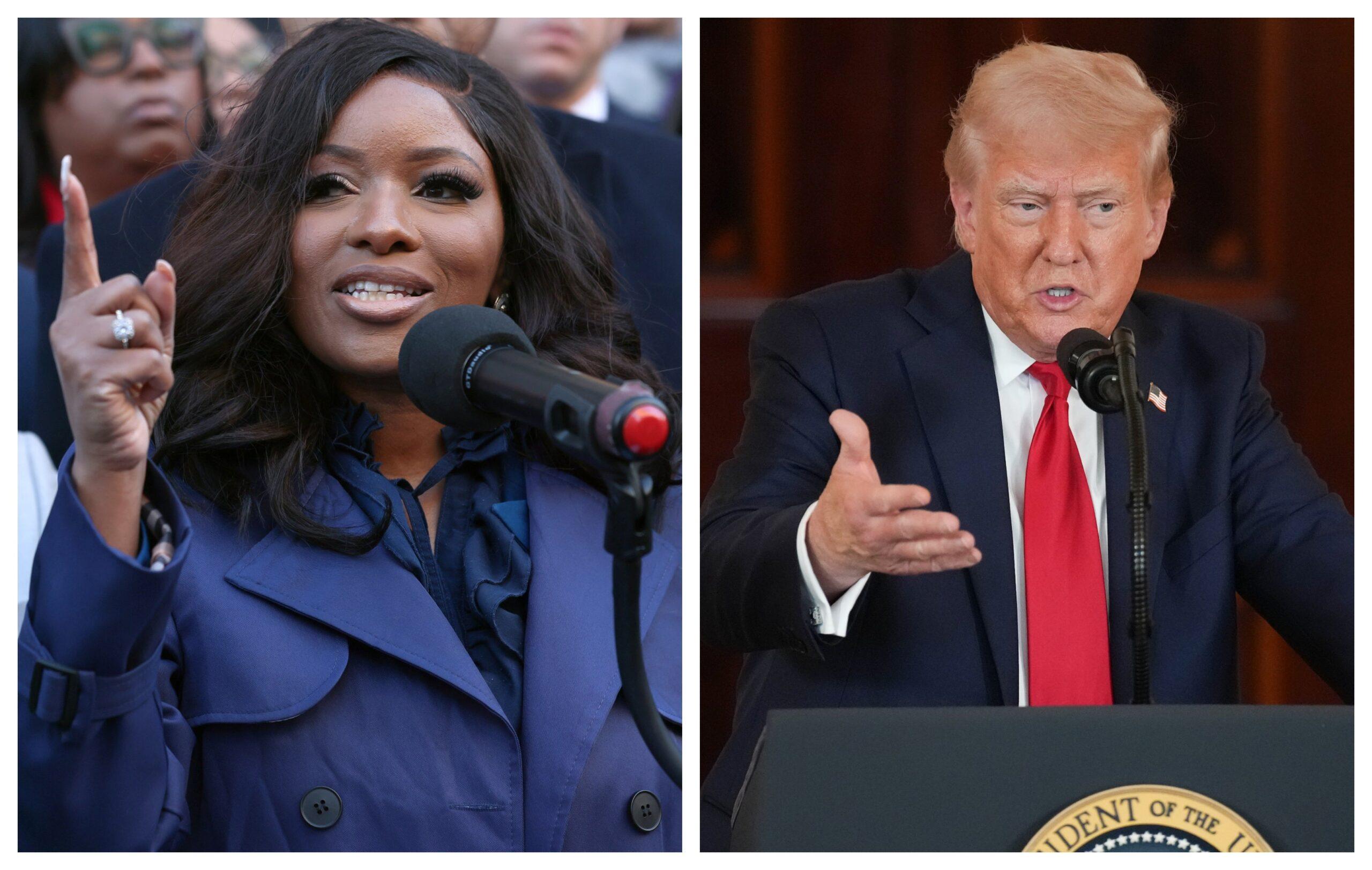
Jasmine Crockett, who has been an outspoken advocate for marginalized communities and a staunch critic of the current administration, was quick to respond. In a fiery statement, she vowed to reveal the “truth” if the President continued to use his power to oppress others. Her words struck a chord with many who viewed her remarks as a symbol of resistance to authoritarianism. Crockett’s decision to publicly challenge T.r.u.m.p’s authority is seen by some as a necessary step in holding powerful figures accountable for their actions. Others, however, fear that such confrontations might lead to further division and instability within the political landscape.
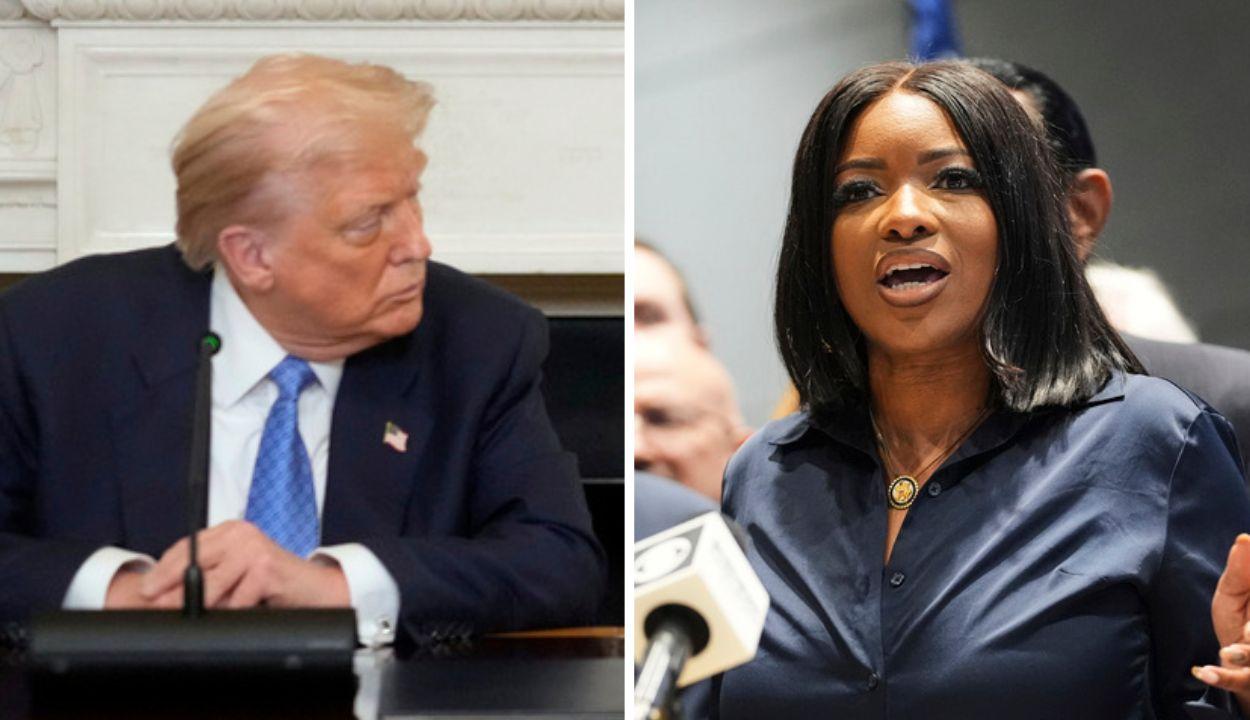
This controversy brings to light the ongoing struggle for political power in the United States, where leaders often clash over the interpretation of justice, fairness, and the rule of law. President T.r.u.m.p’s demand for deportation raises concerns about the limits of presidential power, as it directly challenges the basic principles of due process and the rights of citizens to express dissent without fear of retribution. The President’s remarks have been interpreted by many as an attempt to intimidate political opponents and silence voices critical of his administration.
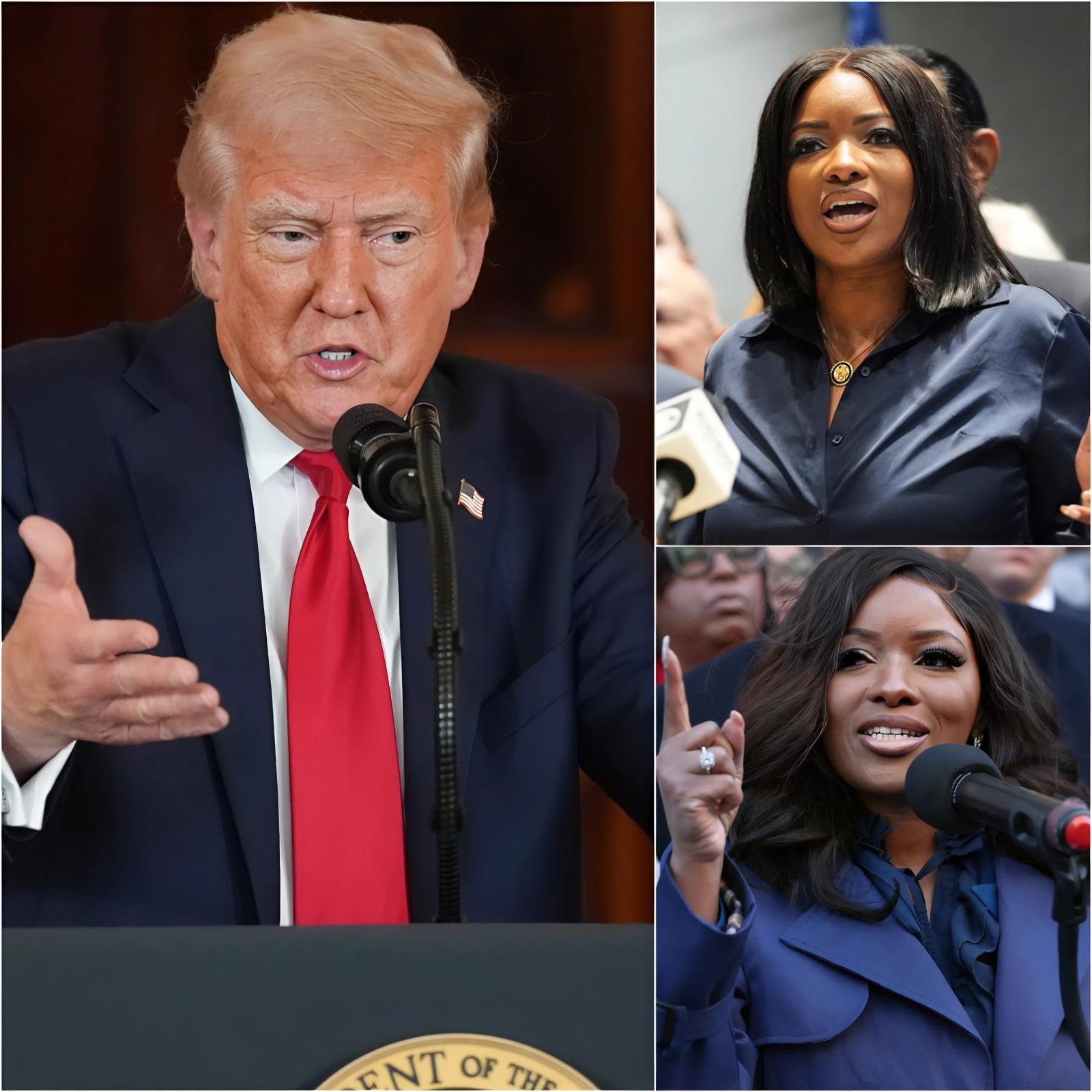
On the other hand, Jasmine Crockett’s defiant stance highlights the resilience of individuals who stand up against perceived injustices. She has long advocated for social change and has become a key figure in the fight for racial justice and equality. Her decision to respond publicly to the President’s remarks reflects her belief that the truth must be revealed, regardless of the consequences. For Crockett, exposing the truth is not just about protecting her own rights but about holding the government accountable for actions that impact the lives of ordinary citizens.
As the situation continues to unfold, many are left wondering how this conflict will shape the future of American politics. Will the actions of President T.r.u.m.p and Representative Crockett lead to a deeper polarization of the political climate, or will they inspire a renewed commitment to transparency and accountability? The coming days may offer more clarity, but for now, the dispute between the President and the Representative serves as a stark reminder of the power struggles that define American democracy.In conclusion, the exchange between President T.r.u.m.p and Jasmine Crockett raises critical questions about the use of political power, the right to protest, and the role of truth in shaping public discourse. As both sides continue to stake their claims, the nation watches closely, understanding that the outcome of this dispute could have lasting implications for the future of American politics.